Support our educational content for free when you purchase through links on our site. Learn more
Are There Chilean Celebrities for the Environment? 🌿

Yes, Chilean celebrities and public figures have spoken out about environmental causes, but the evidence for specific people and ongoing roles can be uneven. When asking, “Are there any Chilean celebrities involved in environmental causes?”, it’s worth separating documented advocacy from a one-off post or a famous name attached to a campaign.
Chile’s environmental causes span a striking range, from water issues in the Atacama to forests, wildlife, and marine protection in Patagonia. Even the often-mentioned conservationist Douglas Tompkins, whose work helped shape Chile’s conservation story, was American—not a Chilean celebrity.
That distinction is more than trivia. It helps us give credit accurately, understand the role of local communities and organizations, and avoid repeating celebrity claims that lack reliable sources.
Key Takeaways
- Yes, Chilean public figures have supported environmental causes, though individual claims should be checked against reliable sources.
- Publicity and sustained advocacy are different. Look for specific campaigns, named partners, and evidence of ongoing work.
- Chile’s environmental concerns vary by region, including water, mining, forests, biodiversity, climate action, and ocean conservation.
- Douglas Tompkins was an influential conservationist in Chile, but he was American—not Chilean.
- Celebrity visibility can help raise awareness, but local communities, scientists, and environmental organizations provide essential expertise and context.
Table of Contents
- ⚡️ Quick Tips and Facts
- 🌿 Chilean Celebrities and Environmental Causes: The Short Answer
- 📚 Chile’s Environmental Activism: A Brief Background
- ⭐ Chilean Celebrities Involved in Environmental Causes
- 1. Actors, musicians, and public figures supporting environmental protection
- 2. Chilean celebrities advocating for climate action and biodiversity
- 3. Indigenous voices and cultural figures defending land and water
- 🌎 The Environmental Issues Chilean Public Figures Champion
- Climate change and renewable energy
- Patagonia, forests, and wildlife conservation
- Water rights, mining, and pollution
- Oceans, marine life, and plastic waste
- 📣 How Celebrity Environmental Advocacy Works in Chile
- 🔎 How to Verify Environmental Campaigns and Charity Claims
- 🧭 Where to Find Reliable Updates on Chilean Environmental Activism
- 🤝 How Visitors Can Support Conservation in Chile
- ✅ Conclusion
- 🔗 Recommended Links
- ❓ FAQ
- Are there any Chilean celebrities involved in environmental causes?
- Which environmental issues receive the most public attention in Chile?
- Do Chilean celebrities support Patagonia conservation?
- How can I tell whether a celebrity environmental campaign is legitimate?
- How can travelers support environmental causes in Chile?
- 📖 Reference Links
⚡️ Quick Tips and Facts
- Yes, Chilean public figures have spoken up for environmental protection, but the evidence varies: some are closely associated with documented campaigns organizations, while others have made occasional public statements. We’ll distinguish those levels rather than treating every eco-friendly post as a sustained advocacy record.
- A prominent environmentalist connected with Chile is not necessarily Chilean. American conservationist Douglas Tompkins, for example, helped establish protected areas in Patagonia. His work matters to Chile’s conservation story, but he should not be described as a Chilean celebrity.
- Chile’s conservation debates often involve Patagonia, forests, biodiversity, water access, mining, renewable energy, and marine protection. The Chilean Ministry of the Environment and CONAF are useful starting points for checking policy and protected-area information.
- Celebrity advocacy can raise awareness; it does not, by itself, prove that a project is effective. Check the organization, its stated work, and independent reporting before donating or sharing a campaign.
- For wider context on celebrities in Chile, keep fame and environmental credentials separate: a famous Chilean and a well-documented environmental advocate are not automatically the same person.
- Traveling through Chile? Support responsible operators and protected areas, and follow local guidance in Patagonia and other destinations. 🌿
| Quick fact | Why it matters |
|---|---|
| Chile stretches from the Atacama Desert to Patagonia | Environmental causes differ sharply by region: desert water, central-zone pollution, forests, and southern marine ecosystems all raise distinct concerns. |
| Public support is not the same as formal advocacy | A social-media post, a fundraiser, and long-term work with an organization are different levels of involvement. |
| International conservationists also shaped Chile’s environmental story | Their contributions should be acknowledged accurately, without mislabeling their nationality. |
| Reliable claims need reliable sources | Look for named organizations, official records, research, and credible reporting—not just recycled celebrity lists. |
🌿 Chilean Celebrities and Environmental Causes: The Short Answer
Yes, Chilean celebrities and public figures have participated in conversations and campaigns related to environmental protection. But the question needs a careful answer: public information does not always establish the same depth of involvement for every person named online.
We recommend checking three things before calling someone an environmental advocate:
- What did they do? Look for a specific campaign, public statement, fundraising effort, or continuing role.
- Who did they work with? Verify the organization or initiative through its own channels and independent sources.
- Is the claim current and documented? Old campaign coverage can be mistaken for ongoing involvement.
That distinction matters in Chile, where a celebrity’s one-time appearance at an event may be shared for years as proof of a long-running commitment. It also helps avoid a familiar mix-up: Douglas Tompkins was a major conservation figure in Chile, but he was American, not Chilean. His work is relevant to the country’s protected-land history, not proof that he belongs on a list of Chilean celebrities.
The short version: there are Chilean public figures associated with environmental causes, but the strongest answers are specific and sourced—not a grab bag of famous names. In the next sections, we’ll look at the country’s environmental context, the kinds of advocacy public figures undertake, and how to separate well-supported claims from celebrity-list copy.
📚 Chile’s Environmental Activism: A Brief Background

Chile’s geography makes environmental protection anything but one-size-fits-all. A conversation about water scarcity in the Atacama is not the same as one about native forests in the south, and neither is identical to marine conservation along the Pacific coast.
The country’s environmental discussion commonly includes:
- Climate change and drought, including impacts on water availability and ecosystems.
- Mining and energy development, with questions about land, water, pollution, and local communities.
- Forests and biodiversity, including habitat protection and restoration.
- Coastal and marine conservation, from fisheries to plastic pollution.
- Indigenous rights and territorial stewardship, which are closely connected to decisions about land and resources.
For policy context, Chile’s Ministry of the Environment publishes information on environmental programs and regulation. CONAF provides information on forests, national parks, and protected areas. The UN Environment Programme’s Chile page offers a broader regional perspective.
Why celebrity involvement attracts attention
Public figures can bring an issue to people who might not otherwise follow environmental policy. A familiar face can help a campaign travel farther, attract press coverage, or make conservation feel more immediate. But fame is a megaphone, not a substitute for evidence or local expertise.
That’s especially relevant in Chile, where environmental decisions can affect communities with long histories and specialized knowledge. Effective advocacy should amplify affected people and credible organizations—not crowd them out.
The Tompkins distinction: influential in Chile, but not Chilean
Douglas Tompkins, the American businessman and conservationist, became a significant figure in Chilean conservation through land protection and park creation. ABC7’s report on his death described his conservation work and the kayaking accident on General Carrera Lake that led to his death in 2015 (ABC7 report).
The distinction is simple but important:
| Description | Accurate? | Why |
|---|---|---|
| “Tompkins was a conservationist whose work affected Chile” | ✅ | His conservation activity included land protection in Chile. |
| “Tompkins was a Chilean celebrity” | ❌ | He was American. |
| “His story is relevant to Chilean conservation” | ✅ | His work and legacy are part of the country’s conservation history. |
His story also reminds us that conservation in Chile has involved international donors, Chilean organizations, government agencies, local communities, and public debate. No single famous person tells the whole story.
⭐ Chilean Celebrities Involved in Environmental Causes
A trustworthy list should not claim more than its sources can support. The available summaries of broad celebrity-environment articles do not substantiate a roster of Chilean names, and a search result or secondary list without accessible evidence is not enough to fill that gap. We’d rather be precise than confidently misidentify someone.
Instead, here’s a useful way to understand the types of public involvement—and what evidence to look for when a particular Chilean actor, musician, athlete, or other public figure is named.
1. Actors, musicians, and public figures supporting environmental protection
Actors and musicians may use interviews, benefit events, public campaigns, or social media to draw attention to conservation. To assess a specific claim, look for:
- A direct source, such as the person’s verified account, an interview, or the campaign organizer’s announcement.
- A clear description of the person’s role: ambassador, participant, donor, spokesperson, or supporter.
- Independent confirmation from a reputable news organization or the relevant nonprofit.
- Evidence that the work is ongoing, if the claim describes continuing advocacy.
| Evidence you find | What it supports | What it does not automatically prove |
|---|---|---|
| A public post about a campaign | The person publicly expressed support | Long-term participation or measurable impact |
| A named role with a nonprofit | A formal connection, subject to the organization’s confirmation | That all the nonprofit’s claims are independently verified |
| Coverage of a benefit event | Participation in that event | A continuing role after the event |
| Repeated, documented work over time | A stronger case for sustained advocacy | That the campaign itself solved the issue |
That may sound less glamorous than a “top 10 eco-celebrities” list, but it is more useful. The most responsible answer is sometimes: the public record does not yet support a stronger claim.
2. Chilean celebrities advocating for climate action and biodiversity
Climate action and biodiversity conservation are related, but they are not interchangeable. Someone may campaign for renewable energy without working on wildlife protection; another may champion a local habitat project without speaking about climate policy.
When evaluating a public figure’s environmental work, ask:
- Is the cause climate mitigation, climate adaptation, habitat conservation, or something else?
- Does the campaign identify a specific place, species, policy, or community?
- Are the relevant facts supported by institutions such as Chile’s Ministry of the Environment, CONAF, or peer-reviewed research?
- Does the campaign include local organizations and affected communities?
Chile’s protected places and biodiversity are spread across very different ecosystems. A public message about forests in the south cannot stand in for advocacy on desert water use or marine protection. For trip ideas that connect nature and place, explore our adventure travel guides and Andes Mountains coverage.
3. Indigenous voices and cultural figures defending land and water
Environmental advocacy in Chile is not only a celebrity story. Indigenous communities, local organizations, scientists, and regional campaigners often have the closest knowledge of the places at stake—and may carry the greatest consequences of environmental decisions.
A respectful account should:
- Name community organizations and spokespersons when they are publicly identified and their work is documented.
- Avoid describing Indigenous people as scenery in a celebrity campaign.
- Distinguish cultural visibility from formal environmental advocacy.
- Include local perspectives when discussing land, water, extractive industries, or conservation projects.
For travelers, this is where environmental awareness and cultural respect meet. Choose experiences that are transparent about community partnerships, ask before photographing people, and learn from local guides. Our cultural experiences in Chile can help you plan with more context and less guesswork.
🌎 The Environmental Issues Chilean Public Figures Champion
Public figures may draw attention to a cause, but the causes themselves are rooted in specific places and practical challenges. Here are some of the major themes that shape environmental conversations in Chile.
Climate change and renewable energy
Climate impacts can affect water supplies, agriculture, ecosystems, and communities. Chile’s long north–south geography means the pressures differ by region. For national policy and official information, consult the Ministry of the Environment and the UN Environment Programme’s Chile overview.
When a celebrity promotes climate action, useful questions include:
- Does the campaign call for a concrete action or policy?
- Does it explain the local issue in a way people can verify?
- Does it acknowledge trade-offs, such as impacts on communities and landscapes?
- Is it connected to credible climate or conservation expertise?
A compelling climate message should make the issue clearer, not merely make the person delivering it more visible.
Patagonia, forests, and wildlife conservation
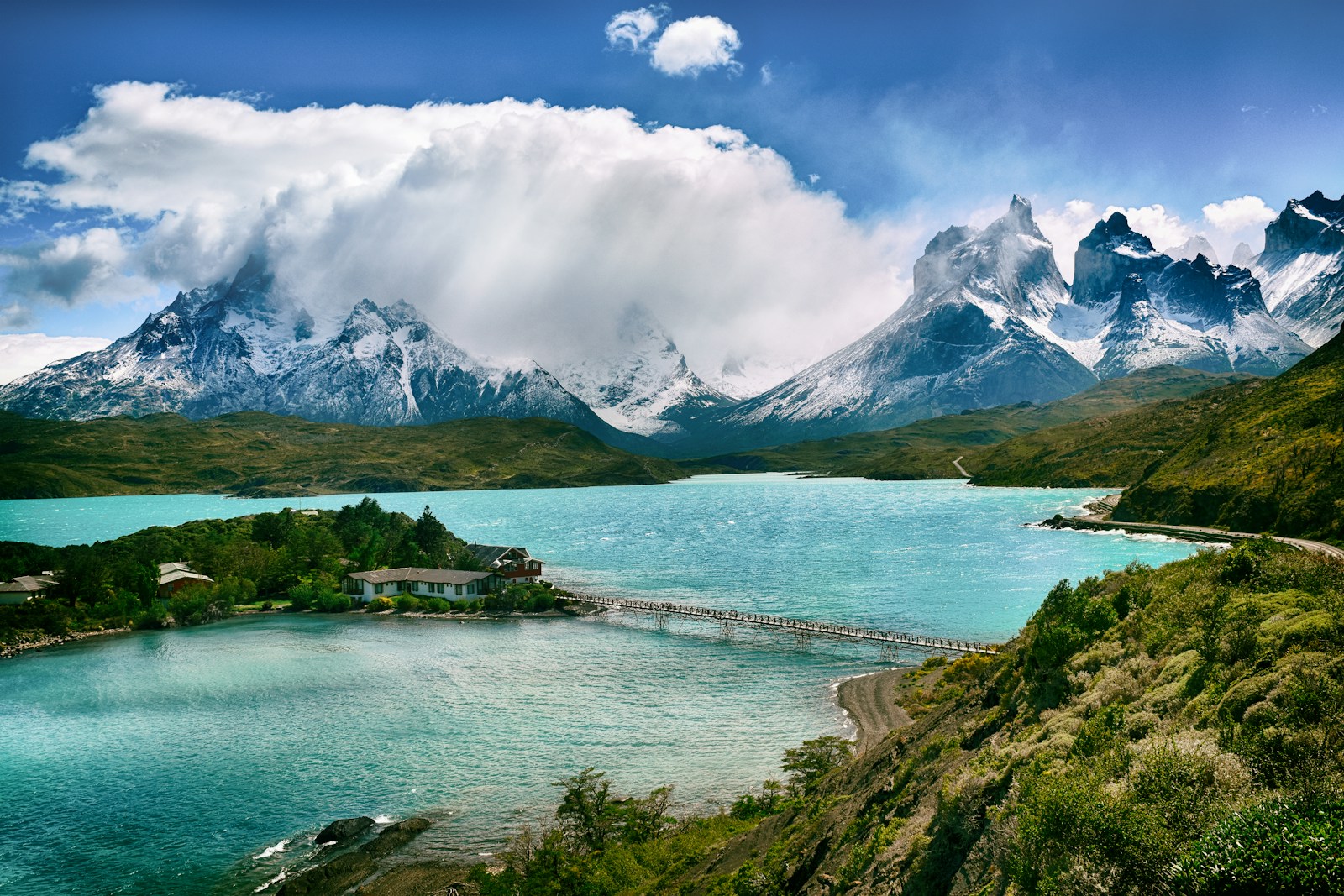
Patagonia is often shorthand for wild landscapes, but it is a real region with communities, protected areas, tourism pressures, and conservation debates. Public attention can help people care about forests and wildlife; it can also flatten complex local issues into postcard imagery.
For background on protected areas, check CONAF. If you’re visiting, follow park regulations, stay on permitted routes, and use responsible operators. Our destinations section and adventure travel guides offer practical planning context.
Douglas Tompkins is a notable example of an international conservationist whose work became closely associated with Chilean Patagonia. ABC7 reported that helped protect large areas and was involved in regional conservation issues; the same report makes clear he was an American public figure (ABC7). That is an important Chilean conservation connection, but not a Chilean celebrity profile.
Water rights, mining, and pollution
Water and resource questions can be especially contentious because they affect ecosystems, livelihoods, and local communities. Mining is an important part of Chile’s economy, while environmental safeguards and community impacts remain central issues in public discussion.
For any advocacy claim about mining or water, seek:
- The location and project name.
- The relevant environmental assessment or public record.
- Statements from local communities and affected groups.
- Independent reporting and scientific evidence.
- A clear distinction between allegation, documented finding, and legal outcome.
Celebrity support can bring attention to a dispute, but it cannot replace technical review or local testimony. Treat dramatic claims as a reason to investigate, not as a complete explanation.
Oceans, marine life, and plastic waste
Chile’s extensive Pacific coastline makes marine conservation and ocean pollution recurring concerns. Campaigns may focus on marine protected areas, sustainable fishing, plastic reduction, or wildlife.
If a musician or actor is described as an ocean advocate, verify the actual campaign and its partners rather than assuming a general environmental message means specific marine-conservation work. The Ministry of the Environment is a useful place to begin for Chilean environmental policy, while UNEP provides international context on marine and plastic-pollution issues.
For visitors, small choices add up:
- Carry a reusable bottle and bag where practical.
- Take all waste back from beaches and trails.
- Follow local rules around wildlife and protected areas.
- Choose tour operators that explain their environmental practices.
- Don’t feed, touch, or chase wildlife for a photo. The animal did not agree to be your co-star. 🐧
📣 How Celebrity Environmental Advocacy Works in Chile
Environmental advocacy by public figures can take several forms. Each has different strengths and limitations.
| Form of involvement | Potential benefit | Common limitation |
|---|---|---|
| Public awareness campaign | Reaches people beyond the usual environmental audience | Attention can fade quickly |
| Fundraising or benefit event | Can direct resources to a stated cause | Donation totals and use of funds need transparency |
| Public statement or interview | Can make an overlooked issue visible | A statement alone does not establish ongoing work |
| Partnership with an organization | Can connect visibility with practical projects | The organization and partnership should be independently checked |
| On-the-ground participation | Can help show the issue and support local teams | Photos can create a misleading impression of lasting impact |
A practical way to evaluate a campaign
- Find the original announcement. Search the celebrity’s verified account or the organization’s own website.
- Identify the partner. Confirm that the group exists and describes the same campaign.
- Read beyond the headline. Check what the person actually did and when.
- Look for results or updates. A pledge is not the same as a completed project.
- Seek independent context. Compare the campaign’s claims with credible reporting and official information.
The supplied video, “22 Celebs Who Are Saving The Environment”, may offer a quick overview of celebrity environmentalism as a broad topic. It is not, by itself, verification of Chilean advocates or their work; use it as a starting point, then check primary and independent sources.
🔎 How to Verify Environmental Campaigns and Charity Claims
A polished campaign can be genuine, exaggerated, or somewhere in between. Before repeating a claim or donating, use this checklist:
- Confirm the person’s identity. Look for verified accounts, official biographies, or reputable interviews.
- Go to the organization’s own website. Check whether it confirms the person’s role and describes the project.
- Read the fine print. Is the person an ambassador, supporter, event guest, or fundraiser? Those labels mean different things.
- Check the date. A campaign from years ago may not be active now.
- Look for transparent reporting. Credible organizations explain their mission, governance, and use of donations.
- Compare sources. Seek independent reporting rather than relying on repeated copies of the same claim.
- Notice what is missing. No named partner, no location, no project details, and no follow-up? Keep your confidence modest.
A useful rule of thumb: the more specific the claim, the more specific the evidence should be. “Supports the environment” is broad. “Raised funds for a named Chilean restoration project in a particular year” is testable.
🧭 Where to Find Reliable Updates on Chilean Environmental Activism
For a clearer picture than a viral list provides, combine official sources, conservation organizations, local voices, and reputable journalism.
| Source type | What it can help you verify |
|---|---|
| Chile’s Ministry of the Environment | Government policy, programs, and environmental announcements |
| CONAF | Forests, protected areas, parks, and conservation information |
| UN Environment Programme | International and regional environmental context |
| Established news outlets | Independent reporting, timelines, and competing perspectives |
| Campaign or nonprofit websites | A group’s stated mission, programs, partners, and updates |
| Peer-reviewed research | Scientific methods, findings, and limitations |
How to read conflicting coverage
Environmental reporting may differ because sources cover different dates, regions, or definitions of “involvement.” One article might describe a person’s public endorsement; another might reserve “activist” for sustained organizing. Those accounts are not necessarily contradictory—they may be using different standards.
When the details conflict:
- Check the publication date and original source.
- Prefer direct records for basic facts such as roles and dates.
- Use independent reporting for context and scrutiny.
- Separate verified facts from opinion or campaign language.
- Leave uncertainty visible rather than smoothing it into a confident but unsupported claim.
This approach is particularly useful when an article about celebrities appears promising but offers no accessible reporting or verifiable names. A missing source is not evidence.
🤝 How Visitors Can Support Conservation in Chile
You don’t need a famous surname to travel thoughtfully. A few practical decisions can make your visit more respectful of Chile’s landscapes and communities.
Before you go
- Read current park and access guidance from CONAF and the relevant local authority.
- Choose guides and operators who explain safety, conservation rules, and community relationships.
- Pack reusable essentials and plan to carry out your waste.
- Learn basic local etiquette and ask before photographing people or private property.
- Check region-specific advice for the Andes or other destinations you plan to visit.
While you’re there
- Stay on marked trails and respect closures.
- Keep a safe distance from wildlife; never feed or handle animals.
- Follow fire restrictions and leave natural objects where they are.
- Support local businesses and community-led experiences when they align with your plans.
- Treat Indigenous culture as living culture, not a backdrop for vacation content. Our cultural experiences guide can help you approach visits with more care.
After your trip
- Share accurate information, not unverified claims.
- If you donate, use the organization’s official channel and review its reporting.
- Recommend responsible operators based on what you actually observed.
- Keep learning: Chile’s environmental debates are regional, evolving, and best understood through multiple voices.
The best souvenir is a memory, not a pocketful of protected-area rocks. And if a celebrity’s campaign inspired your visit, let that be the beginning of your research—not the end.