Support our educational content for free when you purchase through links on our site. Learn more
25 Chilean Foods to Try on Vacation 🍽️


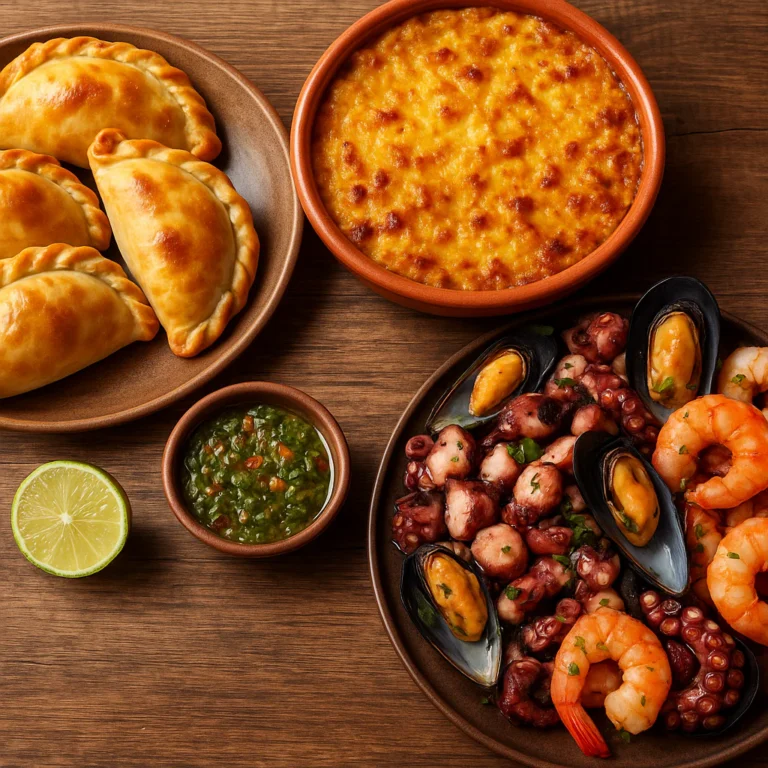
The best local foods to try while on a Chilean vacation include empanadas de pino, pastel de choclo, fresh Pacific seafood, curanto, and mote con huesillo. Start with an empanada and pebre, then follow your appetite from Santiago’s market stalls to Chiloé’s communal feasts—Chile’s long geography serves up a whole menu of regional flavors.
Our favorite kind of food discovery starts with a simple question: ¿Qué recomienda? (“What do you recommend?”) It might lead to a steaming bowl of caldillo de congrio, or a completos lunch so generously topped you’ll need both hands and a strategy. Either way, the best bites often come from asking what’s fresh and local.
Key Takeaways
- Try the classics: Empanadas de pino, pastel de choclo, cazuela, humitas, and porotos granados are a delicious introduction to Chilean home-style cooking.
- Eat by region: Seek seafood along the coast, curanto and potato specialties in Chiloé, and northern dishes such as pataska in the Atacama region.
- Save room for something sweet: Mote con huesillo, alfajores, chilenitos, and torta de mil hojas are worth seeking out.
- Ask what’s fresh and seasonal: Menus and ingredients vary by region, season, and restaurant.
- Check ingredients when needed: Traditional recipes may contain meat stock, lard, dairy, or wheat—even when the dish looks vegetable-forward.
Table of Contents
- ⚡️ Quick Tips and Facts
- 🌎 A Taste of Chile: Food Traditions, Geography, and History
- 🍽️ 25 Best Local Foods to Try on a Chilean Vacation
- 1. Empanadas de pino: Chile’s iconic savory pastry
- 2. Pastel de choclo: Sweet corn and savory comfort
- 3. Cazuela: A hearty Chilean soup
- 4. Porotos granados: Summer beans, corn, and pumpkin
- 5. Completo: Chile’s famously loaded hot dog
- 6. Chorrillana: A shareable mountain of fries
- 7. Humitas: Fresh corn wrapped in corn husks
- 8. Sopaipillas: Pumpkin-seasoned fried dough
- 9. Pebre: Chilean salsa for the table
- 10. Charquicán: A traditional Chilean stew
- 11. Caldillo de congrio: Pablo Neruda’s beloved fish stew
- 12. Paila marina: A seafood lover’s broth
- 13. Machas a la parmesana: Razor clams with cheese
- 14. Reineta and congrio: Chilean fish to order
- 15. Curanto: Chiloé’s earth-oven feast
- 16. Milcao and chapalele: Potato breads from Chiloé
- 17. Chupe de jaiba: Creamy Chilean crab casserole
- 18. Ajiaco: A comforting meat and vegetable soup
- 19. Asado chileno: Chilean barbecue
- 20. Mote con huesillo: A sweet summer drink and snack
- 21. Alfajores and chilenitos: Dulce de leche treats
- 22. Torta de mil hojas: Chile’s many-layered cake
- 23. Chilean wine and food pairings
- 24. Merkén: Smoky Mapuche chili seasoning
- 25. Indigenous and regional ingredients worth seeking out
- 🗺️ What to Eat in Chile by Region
- Northern Chile and the Atacama
- Santiago and Central Chile
- Valparaíso and the Pacific Coast
- Southern Chile, the Lakes District, and Chiloé
- Patagonia and Tierra del Fuego
- 🍇 What’s in Season? Chilean Foods by Season
- 🥬 Vegetarian, Vegan, and Gluten-Free Chilean Food
- 🍴 Where to Eat: Markets, Picadas, Bakeries, and Restaurants
- 🗣️ How to Order Chilean Food: Useful Spanish Food Words
- 🧳 Chilean Food Etiquette and Practical Dining Tips
- ❓ FAQ: Eating Local Food in Chile
- 🏁 Conclusion
- 🔗 Recommended Links
- 📚 Reference Links
⚡️ Quick Tips and Facts
Planning your first Chilean meal? Start with an empanada de pino, order pebre for the table, and save room for mote con huesillo. That trio introduces Chile’s savory, herbal, and sweet sides in one delicious afternoon.
At Chile Vacay™, we share practical ideas for unforgettable Chilean adventures, including the meals that make a trip memorable. Chile’s cuisine stretches from the dry northern altiplano to the Pacific coast, fertile central valleys, and rainy southern archipelago. One day you might eat corn wrapped in husks; another, seafood pulled from cold waters or potatoes with a lineage older than your hiking boots.
| Food or drink | What it is | Best place or season to try |
|---|---|---|
| Empanada de pino | Baked pastry with beef, onion, egg, olive, and sometimes raisins | Bakeries and picadas across the country |
| Pastel de choclo | Savory filling beneath a golden corn topping | Central Chile, especially in corn season |
| Porotos granados | Fresh beans, corn, pumpkin, and basil stew | Summer in central Chile |
| Caldillo de congrio | Conger eel and seafood broth | Coastal restaurants |
| Curanto | Communal seafood, meat, and potato feast | Chiloé, especially at gatherings |
| Completo | Loaded Chilean hot dog, often piled with avocado and tomato | Sandwich shops and market counters |
| Mote con huesillo | Chilled peach-and-wheat drink-dessert | Summer street stands, especially Santiago |
| Carménère | Chilean red wine with ripe-fruit and herbal notes | Central Valley wine regions and wine bars |
A few things to know before ordering
- Lunch is often the main meal. Look for a menú del día at a local restaurant if you want a filling, home-style meal.
- “Chilean sea bass” is a market name for Patagonian toothfish, not a fish literally called Chilean sea bass. Ask what species and catch information a restaurant can provide.
- Seasonality matters. Fresh corn dishes are especially tempting in summer; seafood availability varies with location, weather, and fisheries rules.
- Not every “traditional” dish is meat-free. Ask about broth, lard, and meat-based seasonings if you follow a vegetarian or vegan diet.
- Street food can be a great snack, but choose busy vendors with fast turnover and food served hot.
For official visitor information and regional inspiration, explore Chile Travel and our guides to Chilean destinations and cultural experiences.
🌎 A Taste of Chile: Food Traditions, Geography, and History

Chile’s long, narrow geography puts dramatically different ingredients on the same national menu. The Pacific provides fish and shellfish, central valleys grow fruit and vegetables, the Andes contribute high-altitude food traditions, and the south is famous for potatoes, berries, and hearty cooking. The result is not one uniform cuisine but a collection of regional foodways shaped by Indigenous knowledge, Spanish colonization, migration, and local abundance.
The Encyclopaedia Britannica overview of Chile describes a country spanning a remarkable range of climates and landscapes. You can taste that geography: northern dishes may feature maize and dried meat, central Chile leans on corn, beans, and seasonal produce, while southern tables often bring out potatoes, seafood, and smoked ingredients.
Indigenous roots and changing food traditions
Corn, potatoes, beans, squash, and native herbs have long been important across Chile and the broader Andes. Mapuche food traditions include ingredients such as merkén, a smoky seasoning made with dried chili and spices. In the south, Chiloé’s distinctive potato varieties are central to dishes such as milcao and chapalele.
Spanish and later European influences added livestock, wheat, dairy, and new cooking techniques. These histories meet on the plate rather than sitting in separate culinary boxes: a baked empanada, for example, reflects a pastry tradition adapted to Chilean fillings and tastes.
Some older dishes are less common on everyday restaurant menus than they once were. The travel guide TrekkingChile observes that traditional recipes are “being lost little by little in gastronomy,” and recommends seeking them at picadas—informal, often family-run eateries—or regional restaurants. That is useful advice, with one caveat: what is available changes by region, season, and the individual cook.
What “local food” means in Chile
A dish can be widely known nationwide yet still have a distinct regional home. Empanadas de pino are found across the country; curanto is especially associated with Chiloé; pataska belongs to northern highland food traditions; and fresh seafood is naturally easiest to find near the coast.
So don’t treat a dish’s “best” version as a fixed address. Ask locals what is seasonal, what the kitchen made that day, and what the region does especially well. If you’re planning a food-focused route through the Andes, coastal towns, or southern lakes, our destination guides can help you match meals to your itinerary.
🍽️ 25 Best Local Foods to Try on a Chilean Vacation
Here’s our shortlist of dishes and flavors worth seeking out. You won’t find every specialty in every town, and recipes vary from kitchen to kitchen—that’s part of the fun. A home-style cazuela may be generous with squash; a market stall’s sopaipillas may be sweet or savory; and one cook’s perfect empanada is another traveler’s “I need a nap.”
The overview below can help you pick what suits your appetite. Then keep reading for what’s inside each dish, where to look for it, and what to ask before ordering.
| # | What to try | Flavor and texture | A good first-timer’s cue |
|---|---|---|---|
| 1 | Empanadas de pino | Savory, juicy, gently sweet | Try one baked, fresh from a bakery |
| 2 | Pastel de choclo | Sweet corn against a savory filling | Look for a browned corn top |
| 3 | Cazuela | Clear, comforting broth and tender vegetables | Choose chicken or beef, depending on preference |
| 4 | Porotos granados | Creamy beans, sweet corn, basil | Most seasonal in summer |
| 5 | Completo | Rich, fresh, soft, and messy | Order an Italiano if you like avocado |
| 6 | Chorrillana | Salty, hearty, made for sharing | Bring at least one hungry friend |
| 7 | Humitas | Soft, sweet-savory steamed corn | Ask whether the kitchen serves sugar on the side |
| 8 | Sopaipillas | Crisp outside, tender inside | Try plain first, then pasadas for dessert |
| 9 | Pebre | Fresh, herbal, often a little spicy | Taste a small spoonful before piling it on |
| 10 | Charquicán | Thick, savory vegetable-and-meat stew | Ask whether the day’s version contains meat |
| 11 | Caldillo de congrio | Fragrant fish broth | A coastal classic, often served hot |
| 12 | Paila marina | Briny, warming seafood soup | Ask what seafood is in the pot today |
| 13 | Machas a la parmesana | Tender shellfish, butter, cheese | A rich appetizer to share |
| 14 | Reineta and congrio | Mild or firm-fleshed local fish | Ask which catch is freshest |
| 15 | Curanto | Smoky, communal seafood-and-meat feast | Seek it out in Chiloé |
| 16 | Milcao and chapalele | Dense, satisfying potato breads | Best alongside a larger southern meal |
| 17 | Chupe de jaiba | Creamy crab casserole | Pair with bread and a crisp white wine |
| 18 | Ajiaco | Peppery beef and potato soup | A hearty option after a cold day |
| 19 | Asado chileno | Grilled meat and simple accompaniments | Ask what cut and sides are on offer |
| 20 | Mote con huesillo | Sweet, chilled peach and wheat | Eat it with the spoon as well as the straw |
| 21 | Alfajores and chilenitos | Soft pastry with manjar | Great with coffee or tea |
| 22 | Torta de mil hojas | Crisp pastry layers and manjar | Share a slice unless you’ve skipped lunch |
| 23 | Chilean wine | From crisp whites to structured reds | Match the wine to the dish, not just the label |
| 24 | Merkén | Smoky, earthy chili seasoning | Start with a pinch; it can build |
| 25 | Indigenous and regional ingredients | Potatoes, maize, berries, seafood, herbs | Ask what is local and seasonal |
1. Empanadas de pino: Chile’s iconic savory pastry
If you try only one Chilean snack, make it an empanada de pino. The classic filling combines chopped or minced beef and onion with a hard-boiled egg, olive, and sometimes raisins, enclosed in pastry and usually baked. Expect a hearty turnover, not a dainty two-bite nible.
The filling is called pino, and the pastry should be tender enough to bite through without sending the contents onto your shirt. Some versions are juicier than others; you may hear caldúa used for a particularly moist filling. A little ají or pebre can bring welcome heat and freshness.
- Where to try it: Bakeries, markets, and neighborhood picadas.
- What to ask: ¿Es de pino? (“Is it the pino filling?”) and ¿Está recién hecha? (“Was it just made?”)
- Vegetarian alternative: Look for cheese, mushroom, or vegetable fillings, but confirm the ingredients.
- Traveler tip: Take care with the first bite. A properly juicy pino empanada can behave like a tiny edible soup dumpling.
The TrekkingChile dish guide recommends trying pino empanadas with young Chilean red wine. We like that pairing for a sit-down lunch, while a hot empanada and pebre make a fine grab-and-go meal. For food stops on the road, see our adventure travel guides.
2. Pastel de choclo: Sweet corn and savory comfort
Pastel de choclo is one of Chile’s great sweet-savory combinations: a savory filling, often made with minced beef and chicken, beneath a thick topping of ground fresh corn. The filling may also include onion, olives, and hard-boiled egg, with raisins in some recipes. The corn layer browns in the oven and can taste naturally sweet.
It arrives in different forms, but individual clay dishes are common. Be ready for a substantial meal. Some restaurants serve it with a side salad or rice; at home, the recipe might vary with what is in the kitchen.
Why it’s worth ordering: It showcases fresh corn in a way that feels distinctly different from cornbread or polenta. The contrast between sweet topping and savory filling is the point, not a recipe accident.
Dietary note: The traditional filling is usually meat-based, and the corn topping may contain dairy or other additions. Ask before ordering if you’re vegetarian, vegan, or avoiding dairy. For a plant-based alternative, request humitas or beans if available.
The travel guide WanderBig also flags the sweet corn and savory filling as a defining feature, noting that the filling can include olives. If your first spoonful makes you wonder whether this is dinner or dessert, congratulations: you’ve met the dish on its own terms.
3. Cazuela: A hearty Chilean soup
Cazuela is a deeply comforting broth-based meal, commonly made with a piece of meat or chicken alongside potatoes, pumpkin, and corn. The exact ingredients depend on the household, restaurant, and season. It’s named for the cooking vessel, and a serving can feel like a full meal assembled inside a bowl.
Unlike a thick stew, cazuela usually has a clear, savory broth. You may be served the ingredients in a particular order or simply left to work your way around the bowl. There’s no need to overthink it—spoon up the broth, then enjoy the vegetables and meat.
| What you may find | What it adds |
|---|---|
| Beef or chicken | Deep, savory flavor |
| Potato | A filling, soft center |
| Pumpkin or squash | Sweetness and body |
| Corn on the cob | Seasonal sweetness |
| Rice or noodles | Present in some variations |
- Best for: A cool day, a filling lunch, or anyone craving something more soothing than a sandwich.
- Where to look: Traditional cafés, family restaurants, and picadas.
- Ask first: Some versions contain meat broth even if the visible ingredients are vegetables.
The SAVACATIONS guide to Chilean food describes cazuela as a slow-cooked dish with meat, broth, and vegetables, and recommends simple local restaurants for an authentic version. We agree with the venue advice: a humble bowl in a busy neighborhood comedor can be more memorable than a fancy reinterpretation.
4. Porotos granados: Summer beans, corn, and pumpkin
When fresh beans and corn are in season, look for porotos granados. This central Chilean summer dish combines beans with corn, squash, onion, and herbs such as basil. It can be thick and creamy, with the ingredients partly mashed, or loser and more brothy.
Two names you may encounter are mazamorra, generally the thicker, more mashed-corn style, and pilco, often a loser preparation with whole kernels. Kitchens don’t always use the terms in exactly the same way, so consider them useful clues rather than strict guarantees.
“Absolutely Chilean” is how TrekkingChile characterizes porotos granados. It’s a lovely description of a dish built around local summer ingredients, though you’ll find regional and family variations.
To enjoy it:
- Ask whether the day’s version is mazamorra or pilco.
- Check whether it contains meat stock or lard if you avoid animal products.
- Add pebre only after tasting; the basil and sweet corn already bring plenty of character.
It’s substantial without needing a slab of meat beside it, making it a smart choice for anyone wanting a taste of Chilean home cooking.
5. Completo: Chile’s famously loaded hot dog
A completo is Chile’s exuberant take on a hot dog: a bread roll, sausage, and a generous pile of toppings. The Italiano version is especially famous, topped with tomato, avocado, and mayonnaise. The colors resemble the Italian flag, hence the name.
You’ll also see different topping combinations, including sauerkraut, cheese, or other sauces. There is no tidy way to eat a fully loaded completo. Lean forward, use a napkin, and accept that your first attempt may be more architectural than successful.
- Best for: A quick lunch, late-night bite, or busy travel day.
- Where to find it: Sandwich counters, markets, and casual eateries.
- What to expect: Filling, rich, and often served with fries or a drink.
- Dietary check: Ask about the sausage ingredients and whether a vegetarian option is available.
A Chilean food-tour video linked as #featured-video also gives the completo a starring turn, alongside empanadas, pisco sour, and manjar. The footage moves through Santiago and Valparaíso, where street-side food is part of the city rhythm, not just a pit stop.
6. Chorrillana: A shareable mountain of fries
Chorrillana is a generous plate of fries topped with combinations of beef, sausage, onion, and fried eggs. Some kitchens add other meats or sauces. It’s commonly associated with Valparaíso, and it’s designed for sharing—or for testing your confidence in your own appetite.
This dish is not subtle. It is salty, filling, and best enjoyed in good company. Order it as a main for the table rather than as a “side,” unless your table consists of competitive hikers.
A useful distinction: Recipes differ. The TrekkingChile description emphasizes fries, onion, sausage, beef, and fried eggs; WanderBig describes versions with hot dogs and fries. You may see either, so ask what the kitchen includes.
For the classic Valparaíso experience, look for a traditional restaurant such as J Cruz M, but check current hours and availability before making a special trip. Afterward, the city’s steep hills will provide an entirely unrequested digestif. Find more ideas for exploring the port city in our destination guides.
7. Humitas: Fresh corn wrapped in corn husks
Humitas are made from fresh corn ground or grated into a soft mixture, seasoned with ingredients such as onion and basil, wrapped in corn husks, and steamed. They’re tender, gently sweet, and often served as a summer dish.
Some people add sugar; others prefer tomato or a spicy sauce on the side. One guide mentions chancho en piedra, a crushed tomato-and-onion condiment from central Chile, as a traditional accompaniment. Ask how the kitchen serves its humitas, then taste the corn before adding anything.
Are humitas vegetarian? They may be, but don’t assume. Recipes can include butter, milk, or animal fats, and cooking practices vary. Ask ¿Tiene manteca o caldo de carne?—“Does it have lard or meat broth?”
Humitas are also practical travel food: the husk acts as natural packaging, and you don’t need a fork for the first few bites. Just don’t mistake the wrapper for part of the meal.
8. Sopaipillas: Pumpkin-seasoned fried dough
A sopaipilla is a flat round of dough fried until crisp outside and soft inside. Chilean versions often include pumpkin, which gives the dough a warm color and mild sweetness. Vendors sell them across the country, especially when the weather turns cold.
You’ll encounter two broad ways to enjoy them:
- Savory: Plain, with pebre, cheese, or another condiment.
- Sweet: Sopaipilla pasada, soaked or served with a syrup made from chancaca, often flavored with citrus and spices.
The TrekkingChile guide recommends sopaipillas pasadas on a rainy winter evening. That sounds exactly right: hot fried dough, dark syrup, and weather you can watch from indoors.
Quick ordering tip: Ask whether the version is sweet or savory before ordering a stack. The name is the same; your dessert expectations may not be.
9. Pebre: Chilean salsa for the table
Pebre is a fresh condiment commonly made with chopped onion, cilantro, garlic, oil, salt, chili, and sometimes tomato. Think of it as a bright, spoonable table sauce rather than a smooth dip. Its flavor can range from mild and herbaceous to distinctly spicy.
It’s often served with bread, meat, potatoes, sopaipillas, or empanadas. Some Chileans like to spoon it directly onto food; others keep it on the side. Start with a small taste, since the heat level varies.
| Pebre style | What it’s like | Goes well with |
|---|---|---|
| Tomato-forward | Juicy and bright | Bread, grilled meat, empanadas |
| Herb-forward | Fragrant and fresh | Beans, potatoes, grilled vegetables |
| Chili-heavy | Sharper and hotter | Rich meat dishes and sopaipillas |
Don’t confuse pebre with chancho en piedra. Both are Chilean condiments, but chancho en piedra is traditionally made by crushing ingredients such as tomato, onion, garlic, and chili in a stone mortar. Recipes vary, and names can blur across menus.
A little bowl of pebre at the start of a meal can tell you plenty about the kitchen’s approach to herbs, heat, and freshness. It’s the edible version of “Welcome—make yourself at home.”
10. Charquicán: A traditional Chilean stew
Charquicán is a thick, rustic stew built around vegetables such as potatoes, pumpkin, corn, and green beans. It may include meat or dried meat, and recipes differ across households and regions. The vegetables are often partly mashed, creating a hearty texture that sits somewhere between stew and mash.
Some versions are topped with a fried egg. Others arrive as a simple, nourishing bowl with no garnish at all. Ask whether the day’s version contains beef, dried meat, or meat stock if you’re planning around dietary needs.
It’s an excellent choice when you want something traditional but less familiar than an empanada. If it’s cold outside and your hiking clothes are still damp, charquicán will make a persuasive argument for staying at the table a little longer.
11. Caldillo de congrio: Pablo Neruda’s beloved fish stew
Caldillo de congrio is a fragrant fish soup made with conger eel and a savory broth. Depending on the restaurant, it may include vegetables, shellfish, herbs, or wine. It’s strongly associated with Chile’s coast and famously celebrated in a poem by Chilean poet Pablo Neruda.
A bowl should be warming rather than heavy, though recipes vary. Ask whether the broth contains the conger itself, additional seafood, or cream, and whether the dish is available that day.
The TrekkingChile guide describes the dish as a hot, invigorating soup and recommends seeking it along the central coast. It also notes that some versions arrive in a clay dish with shellfish and wine. That describes a restaurant style, not a universal recipe.
Worth knowing: “Congrio” can refer to conger eel, but the cut and preparation served depend on the menu. If you’re unsure, ask the server to describe the fish and broth before ordering.
12. Paila marina: A seafood lover’s broth
Paila marina is a steaming seafood broth, often served in a deep bowl or small cooking dish. The mix can include mussels, clams, fish, and other shellfish, depending on local catches and the restaurant’s recipe.
It’s a satisfying way to sample several kinds of seafood without ordering separate plates. The broth should taste briny and savory, but the seafood selection is not fixed. Ask what’s included and whether any items are unavailable.
- Where to try it: Coastal seafood restaurants and traditional markets.
- Best for: A warming lunch, especially on a breezy day.
- Allergy note: Shellfish and fish are central ingredients, and cross-contact may be possible.
- Sustainability note: Ask what is local and in season; availability and harvesting rules change.
For further coastal inspiration, explore our Chilean destination guides. On a seafood menu, we like asking, ¿Qué llegó fresco hoy?—“What came in fresh today?” A good server’s answer may point you toward a better meal than choosing by familiarity alone.
13. Machas a la parmesana: Razor clams with cheese
Machas a la parmesana are razor clams baked with a rich topping that typically includes butter, cheese, and sometimes wine or lemon. They’re a Chilean seafood favorite, often served as an appetizer. The clam’s tender, slightly sweet flavor pairs neatly with the salty, browned cheese.
This is a dish where a few bites can be more satisfying than a huge plate. Share it with the table, and ask whether the kitchen uses local clams and what the topping contains.
Trade-off: The cheese and butter make the dish indulgent, while baking can soften the clam’s natural texture. Seafood purists may prefer a simpler preparation; cheese lovers will probably be reaching for the last shell.
Because shellfish seasons and sourcing rules can change, availability isn’t guaranteed. The FAO Fisheries and Aquaculture Division provides broader context on seafood and fisheries, while your restaurant can tell you what it is serving today.
14. Reineta and congrio: Chilean fish to order
When a menu has several local fish options, ask about reineta and congrio. Reineta is commonly served as a filet, grilled or fried; congrio appears in soups and other preparations. Taste, texture, and naming can vary, so the most reliable guide is the server’s description of the specific catch.
“Chilean sea bass” is a well-known restaurant name for Patagonian toothfish. It should not be confused with the fish called congrio. The Monterey Bay Aquarium Seafood Watch offers sustainability guidance on seafood, including toothfish, and highlights why fishing method and source matter.
How to order thoughtfully:
- Ask which fish is freshest or locally sourced.
- Ask how it’s prepared—grilled, fried, baked, or served in broth.
- If sustainability matters to you, ask where it was caught and whether the restaurant can identify the species.
- Choose a preparation that suits the fish; delicate filets generally need less sauce than a rich stew.
At a coastal restaurant, the daily catch can be more rewarding than ordering a famous imported name just because you recognize it.
15. Curanto: Chiloé’s earth-oven feast
Curanto is a communal meal associated with Chiloé, traditionally cooked in a pit in the ground over hot stones. Layers of seafood, meat, potatoes, and other ingredients are covered with large leaves while the feast cooks. Recipes and ingredients depend on the gathering, locality, and season.
A restaurant may also serve curanto en olla, a pot-cooked version that brings together some of the same flavors without the traditional earth oven. It can still be delicious, but the cooking method and communal scale differ.
The TrekkingChile account emphasizes that ingredients and quantities vary with the gathering—a useful reminder that curanto is an event as much as a fixed recipe.
If you’re invited to a curanto:
- Ask what’s included; expect combinations of seafood, meat, and potatoes.
- Let the host explain the serving order.
- Check in advance if you have shellfish, meat, or other dietary restrictions.
- Bring an appetite and a little patience—the cooking takes time.
Curanto is one of the best reasons to build a trip around Chiloé and southern Chile. It’s food as community gathering, not just a list of ingredients.
16. Milcao and chapalele: Potato breads from Chiloé
Chiloé’s potato traditions show up in milcao and chapalele, two satisfying accompaniments that are easy to mix up if you’re new to them.
- Milcao is commonly made with a mixture of grated raw potato and cooked potato, sometimes with lard or pork crackling.
- Chapalele is generally a potato-and-flour dough, shaped into pieces and cooked by methods that vary. It may be boiled, baked, fried, or included in a curanto.
Both can be filling—especially beside meat and seafood. The TrekkingChile guide describes milcao as a classic curanto companion and suggests newcomers pace themselves. Sound advice: potato breads have a quiet talent for making you feel full three bites after you thought you were full.
Potatoes are deeply tied to Chiloé’s food identity. If you want to learn more about southern food and culture, browse our cultural experiences and destination guides.
17. Chupe de jaiba: Creamy Chilean crab casserole
Chupe de jaiba is a baked crab casserole, often made with crab meat, bread soaked in milk, onion, and seasonings, then finished with a browned top. Some versions are especially creamy; others lean more heavily on the sweetness of the crab.
It’s usually rich enough to serve as a main, particularly with bread or a light salad. A crisp Chilean white wine can help balance the creaminess, though water and a squeeze of lemon are entirely respectable companions.
Don’t confuse it with pastel de jaiba, another crab dish that may be served in a similar baked style. Menu names and recipes can overlap. Ask how the restaurant prepares each one if you’re choosing between them.
The TrekkingChile guide also points to crab pie as a coastal specialty and mentions local variations. For diners with shellfish allergies, this dish is an obvious ❌, and shared kitchen equipment may create cross-contact risk.
18. Ajiaco: A comforting meat and vegetable soup
Ajiaco is a savory soup that may use beef, potatoes, onion, chili, parsley, and spices such as cumin and oregano. Some traditional preparations use leftover barbecue meat, turning yesterday’s asado into today’s restorative bowl.
Its name appears in different cuisines across Latin America, and recipes are not identical from country to country. In Chile, look for a filling, peppery soup rather than assuming it will match another version you’ve tried.
The TrekkingChile guide describes Chilean ajiaco as a beef soup with potatoes, onion, green chili, and herbs. It also calls it useful after a celebration. We won’t promise it cures a hangover; we will say that hot broth and potatoes can be welcome after a long night.
19. Asado chileno: Chilean barbecue
An asado chileno is more than grilled meat. It’s a social occasion that may bring together beef, pork, sausages, salads, bread, and conversation that lasts long after the grill cools. The exact menu depends on region, host, and gathering.
A common side is ensalada a la chilena, a simple mix of ripe tomato and thinly sliced onion. Pebre, bread, and potatoes may also appear. Vegetarian guests can often enjoy sides, but ask about meat broths, lard, and shared grills rather than assuming every salad or vegetable is meat-free.
How to enjoy an asado:
- Let your host or server explain the cuts and sides.
- Pace yourself—more food tends to appear after you think the meal is over.
- Try the tomato-and-onion salad to balance richer meat.
- If you drink, ask what local wine is open rather than reaching for the most familiar bottle.
The FAO’s overview of Chile’s agriculture and food systems offers context on the country’s agricultural production, while the asado itself is best understood at a table with friends. For cultural outings, see our cultural experiences in Chile.
20. Mote con huesillo: A sweet summer drink and snack
Mote con huesillo combines cooked wheat (mote) with a dried peach (huesillo) in a sweet, chilled liquid often flavored with chancaca. It’s part drink, part dessert, and part snack—the sort of menu category that politely refuses to be pinned down.
You’re usually given a spoon as well as a straw. Eat the peach and wheat; don’t just drink the syrup and wonder why the vendor handed you cutlery.
It’s especially popular in summer, with street stands and vendors in Santiago offering a refreshing break from the heat. The SAVACATIONS guide likewise highlights the pairing of peach, wheat, and syrup.
Our first-timer method: Take a sip, spoon up a little mote, then tackle the peach. The wheat makes it more filling than a typical cold drink, so it can double as a snack between sightseeing stops.
21. Alfajores and chilenitos: Dulce de leche treats
If you like caramel, look for manjar, Chile’s name for a thick, cooked-milk spread similar to dulce de leche. It fills many local sweets, including alfajores—sandwich cookies with a sweet filling—and chilenitos, small pastries often filled with manjar and coated or dusted in different ways.
Recipes and names can vary across the country, so don’t expect every bakery to make the same version. A good neighborhood bakery is an ideal place to try a few small treats and ask what the house specialty is.
The WanderBig guide recommends giving manjar a try even if you’ve had dulce de leche elsewhere. We agree: the pleasure is partly in discovering how Chilean bakers use it, from a simple cookie filling to layers in a celebration cake.
For a coffee break, pair one pastry with a small cup of coffee rather than ordering an entire assortment. Unless you’ve skipped lunch. Then, as always, we support your decisions.
22. Torta de mil hojas: Chile’s many-layered cake
Torta de mil hojas is a layered cake made from thin pastry sheets and filling, commonly manjar. The layers can be crisp, tender, or softened by time and filling; recipes differ between bakeries and family celebrations.
It’s rich, sweet, and best approached with a fork and no appointment immediately afterward. Try it in a bakery or café, and ask whether the kitchen makes it in-house.
Other cakes worth spotting include torta de tres leches, a sponge cake soaked with three kinds of milk, and fruit-filled cakes with cream or jam. A Chilean food-tour video linked at #featured-video features both manjar and tres leches cake, alongside savory classics—a useful reminder to leave room for dessert, even if the completo is still winning the day.
23. Chilean wine and food pairings
Chile’s wine regions produce an array of styles, from crisp coastal whites to reds grown in warmer valleys. For a first tasting, consider Sauvignon Blanc, Chardonnay, Cabernet Sauvignon, and Carménère. The right choice depends on the bottle and the dish, not just the grape name.
| Try with | Pairing to consider | Why it can work |
|---|---|---|
| Seafood or machas a la parmesana | Sauvignon Blanc or a fresh Chardonnay | Bright acidity can complement seafood and richer toppings |
| Empanadas de pino | Cabernet Sauvignon or Carménère | Red fruit and structure suit savory beef filling |
| Pastel de choclo | Medium-bodied red or a fuller white | The wine needs to handle both corn sweetness and savory filling |
| Asado chileno | Cabernet Sauvignon, Carménère, or Syrah | Grilled flavors can stand up to structured reds |
| Porotos granados or humitas | Sauvignon Blanc or a light red | Freshness can balance sweet corn and herbs |
These are starting points, not laws of wine. Chile’s official wine promotion site, Wines of Chile, offers information on grapes and regions. Ask for a local glass and tell the server what you’re eating.
Two useful distinctions:
- Pipeño is a traditional, often young and rustic wine style; it isn’t simply another name for a premium bottled wine.
- Pisco is a grape spirit, not wine. It appears in cocktails such as the Pisco Sour and piscola.
The SAVACATIONS food guide suggests Carménère with cazuela and also mentions Syrah and Cabernet Sauvignon. That’s a sensible starting point for a meat-based bowl; for lighter chicken or vegetable versions, choose a wine with less weight.
24. Merkén: Smoky Mapuche chili seasoning
Merkén is a smoky, earthy seasoning associated with Mapuche culinary traditions. It’s commonly made with dried chili and may include ingredients such as coriander seed and salt. The exact blend varies, and so does the heat.
Try it in a small amount first. Merkén can add warmth and smoke to soups, meat, vegetables, or eggs, but a heavy hand may overwhelm a delicate dish.
Where to look: Specialty food shops, markets, and restaurants that highlight Indigenous ingredients. If you want to take some home, check the package ingredients and Chile’s current customs rules for bringing food products into your destination.
For cultural context beyond the plate, explore our cultural experiences and learn about the landscapes and communities featured in our Andes travel guides.
25. Indigenous and regional ingredients worth seeking out
The best way to taste Chile is not to hunt only for famous dishes. Ask about the ingredient that’s local to the place you’re visiting. A market stall, seafood counter, or home-style restaurant may introduce you to something that doesn’t appear on every national “must-eat” list.
| Ingredient or specialty | Where it’s associated | How you might encounter it |
|---|---|---|
| Choclo (corn) | Central Chile and the Andes | Humitas, pastel de choclo, soups |
| Potatoes | Especially Chiloé and southern Chile | Milcao, chapalele, stews |
| Merkén | Mapuche culinary traditions | Seasoning for meat, vegetables, and soups |
| Machas | Pacific coast | Baked with cheese or prepared simply |
| Locos (abalone) | Chilean coast | Often served with potatoes or salad when available |
| Digüeñes | Southern Chile in season | A seasonal mushroom salad or side |
| Chancaca | Traditional sweets and drinks | Sopaipillas pasadas and mote con huesillo |
| Pipeño | Central Chile | A young, traditional wine style |
Availability varies. For example, locos are subject to fishing regulations and may not be legally available at all times. The Servicio Nacional de Pesca y Acuicultura (SERNAPESCA) publishes information on fisheries and regulations; ask restaurants to confirm legal sourcing.
Some ingredients are seasonal by nature, and some dishes are simply more common in their home regions. That’s not a reason to chase every item on a checklist—it’s a reason to ask what’s special where you are.
🗺️ What to Eat in Chile by Region
Chile is long enough that a food itinerary can change character several times without crossing a border. Here’s a practical guide to regional flavors and where to focus your appetite.
| Region | Foods to look for | A good strategy |
|---|---|---|
| Northern Chile and the Atacama | Pataska, mote de maíz, highland stews | Ask about local maize and traditional festival dishes |
| Santiago and central Chile | Empanadas, pastel de choclo, porotos granados, mote con huesillo | Visit markets and neighborhood picadas |
| Valparaíso and the coast | Chorrillana, seafood soups, fish, machas | Ask what arrived fresh; share rich plates |
| Southern Chile, lakes, and Chiloé | Curanto, milcao, chapalele, smoked fish | Seek regional restaurants and community food events |
| Patagonia and Tierra del Fuego | Lamb, trout, seafood, berries, mate | Plan around season and local supply |
Northern Chile and the Atacama
Northern food traditions reflect high-altitude environments, local crops, and Indigenous heritage. Look for pataska, a hearty stew featuring maize, potatoes, and meat, and ask about local preparations of mote de maíz, a traditional boiled-maize snack or ingredient.
In towns and villages of the altiplano, menus may be less standardized than in Santiago. Take your cue from what local restaurants are cooking, particularly during festivals and community celebrations.
If your trip includes desert exploration, plan meals around the day’s activity rather than assuming you’ll find a late-night restaurant in a small settlement. Browse our Atacama and northern Chile destination guides and adventure travel ideas before heading out.
Santiago and Central Chile
Central Chile is a strong place to sample classic dishes and seasonal produce. In Santiago, look for empanadas de pino, completos, mote con huesillo, and pastel de choclo. In summer, ask whether a kitchen has porotos granados made with fresh beans and corn.
Markets are useful for seeing produce and local food in one place. La Vega Central is a major Santiago market where shoppers and visitors can explore fresh ingredients and prepared foods; check current hours and conditions before visiting. For official city information, start with Chile Travel and consult our Santiago travel ideas.
A small picada can be just as rewarding as a famous restaurant. Look for a busy lunchtime crowd, a short menu, and the menú del día. If you’re on a budget, our budget travel guides include tips for eating well without turning every meal into a splurge.
Valparaíso and the Pacific Coast
Along the coast, seafood is a natural priority. Try paila marina, caldillo de congrio, fish of the day, or machas a la parmesana when available. Valparaíso also has its own famously filling comfort dish: chorrillana.
Not every coastal menu is a guarantee of local catch, so ask what arrived fresh and where it came from. A little curiosity can also help you avoid ordering an imported fish when a local one is at its best.
For the full port-city experience, combine a seafood lunch with a walk through Valparaíso’s hills and cultural districts. Find inspiration in our destination guides and cultural experiences.
Southern Chile, the Lakes District, and Chiloé
The south is a place to seek out potato dishes, smoked fish, seafood, berries, and warming meals. Curanto, milcao, and chapalele are especially associated with Chiloé, while the Lakes District offers its own blend of local produce and culinary influences.
A curanto may be served at a festival or community gathering, or as a pot-cooked restaurant version. Ask which one you’re getting; the two can share ingredients without sharing the same cooking method or social scale.
On cool or rainy days, simple soups, breads, and hot drinks have an almost unfair advantage. Explore our southern Chile destinations and cultural travel guides to plan around local food traditions.
Patagonia and Tierra del Fuego
In Patagonia, menus may feature lamb, trout, seafood, and seasonal produce. What’s available depends on the location, weather, and time of year, so ask your host or server what the region is serving now.
Mate is also part of social life in parts of southern Chile. It’s an infusion made from yerba mate and traditionally sipped through a metal straw from a shared vessel. If someone offers to share, follow their lead on the order of passing and refilling; customs vary between groups.
For long hikes and remote drives, carry snacks and plan meals ahead. Our Patagonia and adventure travel guides offer more ideas for combining outdoor days with regional food stops.
🍇 What’s in Season? Chilean Foods by Season
Seasonality makes a noticeable difference to Chilean food. Fresh corn and summer beans are ideal in warm months; winter brings a stronger appetite for soups, stews, and fried snacks. Seafood availability is shaped by catch, regulations, and local conditions, not simply by the calendar.
Chile sits in the Southern Hemisphere, so the seasons run opposite to those in North America and Europe. For current agricultural and climate context, consult Chile’s National Institute of Statistics and Chile Travel.
| Season in Chile | Months | Foods to ask about |
|---|---|---|
| Summer | December–February | Porotos granados, fresh corn, mote con huesillo, seasonal fruit |
| Autumn | March–May | Harvest foods, warming soups, local fruit and nuts |
| Winter | June–August | Cazuela, ajiaco, sopaipillas, slow-cooked dishes |
| Spring | September–November | New produce, herbs, lighter meals, regional seafood where available |
Best way to use this table: Treat it as a guide, not a promise. Weather and regional growing conditions affect what appears on menus, and restaurant versions may use preserved or frozen ingredients outside peak season.
If you’re visiting in summer, ask for fresh-corn dishes. In winter, look for something hot, generous, and broth-based—and keep a napkin ready if sopaipillas pasadas are involved.
🥬 Vegetarian, Vegan, and Gluten-Free Chilean Food
Chile has plenty of plant-forward ingredients, but traditional dishes can contain hidden animal products. Humitas, porotos granados, salads, fruit, and some soups may work for vegetarian diners, but recipes vary. Vegan visitors should be especially careful about butter, milk, cheese, lard, meat stock, and mayonnaise.
A quick dietary guide
| Dish or food | Potentialy suitable? | What to check |
|---|---|---|
| Humitas | Vegetarian, sometimes vegan | Butter, milk, cheese, lard |
| Porotos granados | Often vegetarian, not always vegan | Meat stock, lard, butter |
| Pebre | Often vegan | Recipe variations and shared serving spons |
| Sopaipillas | Often vegetarian; vegan status varies | Lard, eggs, dairy |
| Ensalada a la chilena | Usually plant-based | Dressing and shared preparation |
| Empanadas | Depends on filling | Animal fat in pastry, meat stock, cheese |
| Cazuela | Usually meat-based | Broth and meat |
| Seafood soups | Not vegetarian | Fish, shellfish, stock |
Useful Spanish phrases
- Soy vegetariano/a. — I’m vegetarian.
- Soy vegano/a. — I’m vegan.
- ¿Tiene carne, caldo de carne o manteca? — Does it have meat, meat broth, or lard?
- ¿Tiene leche, queso, mantequilla o huevo? — Does it have milk, cheese, butter, or egg?
- ¿Se cocina aparte? — Is it cooked separately?
- Tengo alergia a… — I’m allergic to…
For gluten avoidance, ask about wheat flour in breads, pastry, fried foods, and sauces. Chilean empanadas and sopaipillas are commonly made with wheat flour, while corn-based dishes are not automatically gluten-free if prepared in a shared kitchen.
Travelers with serious allergies should explain the severity clearly and carry translated allergy information. For broader trip planning, explore our Chile travel and destination guides.
🍴 Where to Eat: Markets, Picadas, Bakeries, and Restaurants
The best meal may be a market snack, a bakery empanada, or a lunch special in a no-frills dining room. You don’t need to chase famous restaurants for every dish. Look for places where locals are eating, menus are focused, and food is turning over quickly.
Markets
Markets are great for seeing what’s in season and sampling casual food. In Santiago, La Vega Central is a well-known produce market; other cities have their own municipal markets and food halls. Visit with an open mind, watch how locals order, and ask before photographing vendors or stalls.
Picadas and neighborhood restaurants
A picada is often an informal, traditional eatery serving generous home-style food. Some are tiny; some have been local institutions for generations. Look for a lunchtime crowd and ask about the menú del día.
Bakeries and street vendors
Bakeries are dependable places to look for empanadas, bread, and sweets. Street stands can be excellent for sopaipillas or mote con huesillo, especially when they’re busy and serving food fresh.
A few practical checks:
- Choose busy stalls with steady turnover.
- Prefer hot food served hot and cold food kept chilled.
- Wash or sanitize your hands before eating.
- Carry water, especially on warm days or long excursions.
- If you have allergies, ask about ingredients and shared equipment.
Buying produce and snacks
Supermarkets such as Jumbo, Lider, Unimarc, Santa Isabel, and Tottus can be useful for fruit, packaged snacks, and picnic supplies. Store formats and product selection vary by location. For market visits and local shopping, see our budget travel recommendations and destination guides.
🗣️ How to Order Chilean Food: Useful Spanish Food Words
A few food words can make ordering easier and more fun. Chilean Spanish has its own expressions and pronunciations, but a friendly attempt is usually appreciated.
| Spanish | Meaning |
|---|---|
| Empanada de pino | Empanada with the traditional beef-and-onion filling |
| Sin carne | Without meat |
| Sin queso | Without cheese |
| ¿Qué recomienda? | What do you recommend? |
| ¿Qué llegó fresco hoy? | What arrived fresh today? |
| Menú del día | Set or daily menu |
| Para llevar | To go |
| La cuenta, por favor | The bill, please |
| Poco picante | A little spicy |
| Sin ají | Without chili |
| ¿Tiene frutos del mar? | Does it contain seafood? |
A simple step-by-step ordering plan
- Ask what the house recommends. ¿Qué recomienda?
- Check the ingredients if you have dietary needs or allergies.
- Ask about the portion size if you’re ordering something rich or shareable: ¿Es para compartir?
- Clarify the preparation. ¿Es frito, al horno o a la parrilla?—fried, baked, or grilled?
- Order one new dish at a time when traveling with a group. You’ll get more variety without committing to four giant plates of the same thing.
If the menu is unfamiliar, point to a neighboring table’s dish and ask what it is. It’s not elegant—but it works, and it often leads to a better meal.
🧳 Chilean Food Etiquette and Practical Dining Tips
A few small habits can make meals smoother and help you get more from local food.
Timing and meal planning
Lunch is often a substantial meal, and some restaurants may close between meal periods. In smaller towns, opening hours can be limited, particularly outside the busy season. Check ahead when your route includes remote areas.
Sharing and portions
Chorrillana, machas, and some appetizers are ideal for sharing. Ask ¿Es para compartir? before ordering, and remember that a shared plate can still be generous.
Tipping and payment
Tipping practices can vary by restaurant and service. Check the bill and ask whether a suggested tip is included; don’t assume the same convention applies everywhere. Keep some cash available for markets or small stalls, while many larger businesses accept cards.
Food safety and allergies
Use normal travel precautions: choose busy places with good food turnover, drink safe water, and be cautious with unrefrigerated foods in hot weather. Travelers with serious allergies should communicate clearly and confirm whether shared cooking surfaces or utensils are used.
Alcohol and altitude
Chile has excellent wine and spirits, but alcohol can affect people differently at altitude or after a long, dehydrating hike. Drink water, eat properly, and pace yourself. If you’re heading into the Andes, our Andes travel guides and adventure travel tips can help you plan beyond the menu.
One small piece of advice from our own road meals: keep a napkin handy, particularly for completos and juicy empanadas. A little mess is part of the story.