Support our educational content for free when you purchase through links on our site. Learn more
🌬️ Chilean Patagonia Travel: The Ultimate 2026 Guide to 10 Wild Destinations


Forget the crowded trails; the real magic of Chilean Patagonia Travel lies in the untamed wind and the silence of the backcountry. You don’t need to be a superhuman athlete to experience the raw beauty of the Southern Ice Field, but you do need the right gear and a flexible spirit to survive the gale-force gusts that define this region.
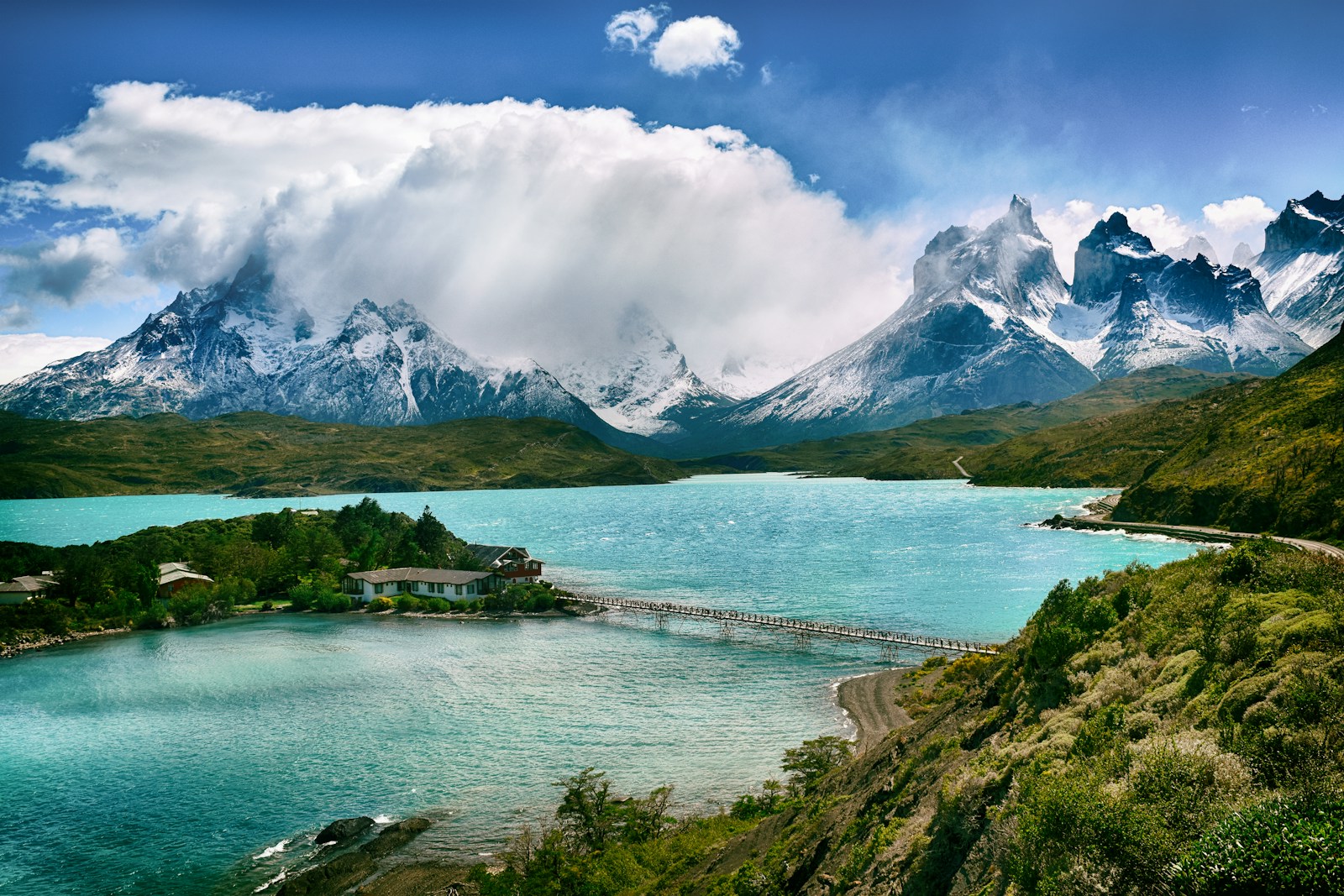
Imagine standing on a ridge in Torres del Paine, watching a storm roll in from the Atlantic, turning the turquoise lakes into churning emeralds while the granite towers glow pink in the fading light. That is the moment that makes the journey worth every blister and every hour of bus travel.
Did you know that the wind in this region can reach speeds of over 10 km/h, shaping the trees into twisted, wind-sculpted forms known as “flag trees”? It’s a landscape that demands respect, but rewards you with views that feel almost alien.
Whether you are chasing the elusive puma, kayaking beneath the Marble Caves, or simply sipping café con leche in Puerto Natales, this guide covers every angle of your adventure.
Key Takeaways
- Timing is everything: Visit between October and April for the best balance of weather and accessibility, with November and March offering fewer crowds.
- Gear up for the wind: A high-quality windproof shell and sturdy, waterproof boots are non-negotiable for safety and comfort.
- Book ahead: Accomodation in Tores del Paine (refugios and campsites) fills up months in advance, especially for the W and O treks.
- Go beyond the hotspots: Explore the Caretera Austral and Bernardo O’Higgins National Park to escape the summer crowds.
- Embrace the unpredictability: Be ready for four seasons in a single day; flexibility is your most valuable asset.
Table of Contents
- ⚡️ Quick Tips and Facts
- 🏔️ The Wild History of Chilean Patagonia: From Indigenous Roots to Modern Treking
- 🗺️ Planning Your Ultimate Chilean Patagonia Itinerary: When to Go and How Long to Stay
- 🏕️ Top 10 Must-Visit Destinations in Chilean Patagonia
- 1. Torres del Paine National Park: The Crown Jewel
- 2. Grey Glacier and the Grey Lake Experience
- 3. The W Trek vs. The O Circuit: Choosing Your Path
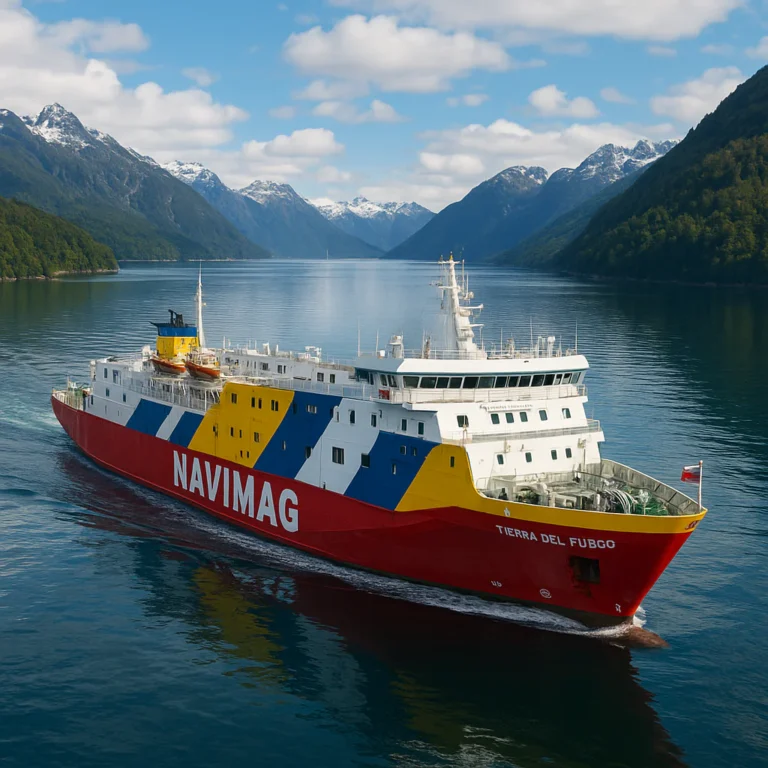
- 4. Tierra del Fuego: The End of the World
- 5. Puerto Natales: The Gateway to Adventure
- 6. Serrano River and the Paine Massif Views
- 7. Bernardo O’Higgins National Park: The Untouched Frontier
- 8. The Marble Caves of General Carrera Lake
- 9. Cape Horn: Chasing the Southernmost Point
- 10. The Caretera Austral: A Road Trip Through Rugged Beauty
- 🥾 Mastering the Hiking Trails: Gear, Permits, and Safety in the Wind
- 🚐 Getting Around: Flights, Buses, and the Legendary Caretera Austral Road Trip
- 🏨 Where to Sleep: From Luxury Eco-Lodges to Refugios and Camping
- 🍲 Tasting Patagonia: Authentic Cuisine, Local Wines, and Culinary Secrets
- 🌊 Beyond the Hike: Kayaking, Boat Tours, and Wildlife Spoting
- 🌡️ Battling the Elements: Understanding the Wind, Weather, and Seasonal Shifts
- 🚶 ♀️ Avoiding the Crowds: How to Explore Beyond the Hotspots
- 🤝 Connecting with Locals: Culture, Etiquette, and Hidden Gems in Puerto Natales
- 🏙️ Don’t Skip the Cities: Exploring Punta Arenas and Puerto Natales
- 🛂 Crossing the Border: Navigating Argentina-Chile Transitions with Ease
- 📸 Capturing the Wild: Photography Tips for the Patagonian Landscape
- 💡 Inspiration in Your Inbox: Resources for Your Next Adventure
- 🏁 Conclusion: Why Chilean Patagonia Will Change You Forever
- 🔗 Recommended Links
- ❓ FAQ: Your Burning Questions About Chilean Patagonia Answered
- 📚 Reference Links
⚡️ Quick Tips and Facts
Before you pack your bags and chase the horizon, let’s cut through the noise. Chilean Patagonia isn’t just a destination; it’s a test of endurance, a feast for the senses, and a place where the wind has its own personality. Here is the lowdown from our team at Chile Vacay™, distilled from years of battling gale-force gusts and chasing pumas in the wild.
| Feature | The Reality Check |
|---|---|
| The Wind | It’s not just “breezy.” We’re talking gale-force winds that can knock you off your feet. Summer (Dec-Feb) is the windiest season. |
| The Weather | Expect four seasons in one day. Sun, rain, hail, and wind can all happen before lunch. |
| Best Time to Visit | October to April. November offers wildflowers; March offers autumn colors. December-February is peak (and busiest). |
| Currency | Chilean Peso (CLP). Credit cards are widely accepted, but cash is king in remote areas. |
| Connectivity | Wi-Fi is spotty in Torres del Paine and non-existent on the Caretera Austral. Download offline maps! |
| Language | Spanish is essential outside tourist hubs. A few phrases go a long way with locals. |
| Visa | Many nationalities (US, EU, Canada) get 90 days visa-free. Check your specific requirements. |
Pro Tip: If you think you’re overpacking, you’re probably underpacking. We’ll get into the specific gear you need later, but trust us on this: layering is your best friend.
🏔️ The Wild History of Chilean Patagonia: From Indigenous Roots to Modern Treking

You might think Patagonia has always been a playground for hikers in North Face jackets, but the story goes back much further. Long before the first tourist bus rolled into Puerto Natales, the Tehuelche and Selk’nam people roamed these steppes, living in harmony with the harsh landscape. They were master trackers, surviving the cold and the wind with nothing but their wits and simple tools.
Fast forward to the 19th century, and the narrative shifts dramatically. Sheep farming exploded, turning vast swathes of the stepe into grazing land. This era brought the gauchos (Chilean cowboys) and a wave of European settlers, but it also led to the tragic displacement and near-extinction of the indigenous populations.
The modern era of Patagonia as a conservation giant began with the Tompkins Conservation efforts. In the 190s, Doug and Kris Tompkins (founders of Patagonia the clothing brand and The North Face) bought up massive tracts of degraded land. Their vision? To restore the wild. Thanks to their work, Patagonia National Park was created, transforming former sheep ranches into a sanctuary for guanacos, condors, and elusive pumas.
“The feeling of being in Patagonia is super special and is easily one of my top three favorite places in the world.” — Travel Beyond
This history isn’t just background noise; it shapes the landscape you see today. When you hike through a forest that was once a sheep pasture, you’re walking on a restored ecosystem. It adds a layer of depth to every step you take.
🗺️ Planning Your Ultimate Chilean Patagonia Itinerary: When to Go and How Long to Stay
So, you want to go. But when? And for how long? This is the question that keeps us up at night (well, when we aren’t staring at the Southern Cross).
The Seasonal Shuffle
- Spring (Oct-Nov): The land wakes up. Wildflowers bloom, and the crowds are thinner. However, the weather is the most unpredictable. You might see snow on the peaks and sun on the lakes in the same hour.
- Summer (Dec-Feb): The peak season. Days are long (sunset can be as late as 10 PM!), and the weather is “warmest” (think 15°C–20°C). But be warned: the wind is at its fiercest, and the trails are packed.
- Autumn (Mar-Apr): The golden hour. The foliage turns fiery red and orange. The wind starts to die down slightly, and the crowds thin out. It’s our personal favorite.
- Winter (May-Sept): Most refugios close, and the snow makes many trails impassable. However, for those seeking solitude and winter sports, it’s a magical, silent world.
How Long Should You Stay?
We’ve seen people rush through in 3 days, and we’ve seen people stay for a month. Here’s the sweet spot:
- Minimum: 7-10 days. This gives you 3-4 days for Torres del Paine, 2 days for Puerto Natales, and a buffer for travel.
- Ideal: 14-21 days. This allows you to combine Torres del Paine with the Caretera Austral, explore the Marble Caves, and maybe even cross into Argentina.
Why the extra time? Because in Patagonia, the weather dictates the plan. If the wind is howling at 80 km/h, you aren’t hiking the Base Towers. You’re having a café con leche in a cozy café in Natales. Flexibility is key.
🏕️ Top 10 Must-Visit Destinations in Chilean Patagonia
We’ve hiked the trails, kayaked the lakes, and camped under the stars. Here are the 10 absolute must-visit destinations that define the Chilean Patagonia experience.
1. Torres del Paine National Park: The Crown Jewel
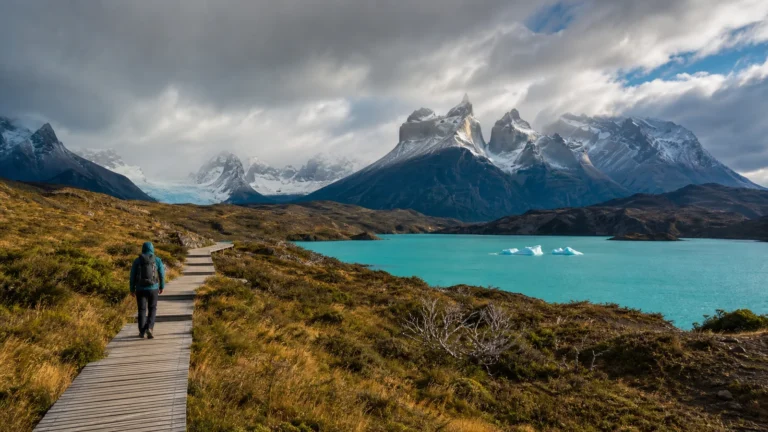
Let’s start with the big one. Tores del Paine is the reason most people come here. The granite towers, the turquoise lakes, the glaciers—it’s all here. It’s a UNESCO Biosphere Reserve and arguably one of the most beautiful places on Earth.
- Why go: The iconic Los Cuernos and Las Torres peaks.
- Don’t miss: The Grey Glacier boat tour.
- Crowd Factor: High in summer. Go early or late.
2. Grey Glacier and the Grey Lake Experience
Located in the western part of the park, Grey Glacier is part of the Southern Patagonian Ice Field. It’s massive, ancient, and constantly calving.
- The Experience: Take a boat to get up close to the ice wall, or hike the Grey Glacier Trek for a view from above.
- Pro Tip: The color of the water in Lake Grey is a surreal turquoise that defies photography.
3. The W Trek vs. The O Circuit: Choosing Your Path
You can’t talk about Torres del Paine without talking about the treks.
- The W Trek: The classic 4-5 day loop. Covers the highlights (French Valley, Grey Glacier, Base Towers). Great for first-timers.
- The O Circuit: The full 7-9 day loop. Adds the remote backside of the park. Fewer people, more solitude, harder terrain.
4. Tierra del Fuego: The End of the World
Technically shared with Argentina, the Chilean side of Tierra del Fuego offers a rugged, wild experience. It’s the southernmost tip of South America.
- Highlight: The Cape Horn expedition (more on that later).
- Vibe: Remote, windy, and incredibly atmospheric.
5. Puerto Natales: The Gateway to Adventure
Before you hit the trails, you’ll likely spend time in Puerto Natales. This charming town is the supply hub for Torres del Paine.
- What to do: Rent gear, eat cordero al palo (roast lamb), and visit the Monumento al Viento (Wind Monument).
- Why it matters: It’s the perfect place to aclimate and plan your next move.
6. Serrano River and the Paine Massif Views
The Serrano River flows from Lake Sarmiento to the Grey Lake. It’s a stunning waterway that offers some of the best views of the Paine Massif.
- Activity: Kayaking or boat tours.
- Scenery: Dramatic cliffs and glaciers meeting the river.
7. Bernardo O’Higgins National Park: The Untouched Frontier
If Torres del Paine is the “popular” park, Bernardo O’Higgins is the secret. It’s the largest national park in Chile and home to the Southern Patagonian Ice Field.
- Access: Only by boat or helicopter.
- Experience: True wilderness. No trails, no crowds, just raw nature.
8. The Marble Caves of General Carrera Lake
Located in the Aysén region, these Marble Caves (Cuevas de Mármol) are a geological wonder. The water has carved swirling patterns into the limestone over thousands of years.
- Best time: Summer, when the water is calm.
- How to get there: Boat tour from Puerto Chacabuco or Puerto Ingeniero Ibáñez.
9. Cape Horn: Chasing the Southernmost Point
Cape Horn is the southernmost headland of the Tierra del Fuego archipelago. It’s a legendary spot for sailors and adventurers.
- The Challenge: Getting there requires a boat trip from Puerto Williams.
- The Reward: Standing at the edge of the world, where the Atlantic and Pacific oceans meet.
10. The Caretera Austral: A Road Trip Through Rugged Beauty
The Caretera Austral (Southern Highway) is a 1,240 km road that winds through the heart of Patagonia. It’s unpaved in many sections, bumpy, and absolutely breathtaking.
- Route: From Puerto Mont to Villa O’Higgins.
- Highlights: Waterfalls, forests, glaciers, and remote villages.
🥾 Mastering the Hiking Trails: Gear, Permits, and Safety in the Wind
Hiking in Patagonia is not a walk in the park. It’s an adventure that demands respect. The trails are rugged, the weather is volatile, and the wind can be a physical force.
Essential Gear Checklist
You don’t need the most expensive gear, but you need the right gear.
- Footwear: Waterproof, broken-in hiking boots with good ankle support. Brands like Merell, Salomon, and La Sportiva are popular.
- Layers: Base layer (merino wool), mid-layer (fleece), and a windproof/waterproof shell.
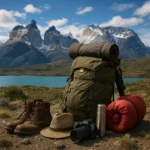
- Backpack: 30-40L for day hikes, 60L+ for multi-day treks.
- Treking Poles: Highly recommended for stability on rocky terrain and river crossings.
Permits and Reservations
- Tores del Paine: You must book your camping spots or refugio rooms in advance. The park has a strict capacity limit.
- O Circuit: Requires a permit, often booked months in advance.
- Booking: Use the official CONAF website or authorized operators like Vertice Patagonia or Refugios Patagonia.
Safety First
- Weather: Check the forecast daily, but be prepared for anything.
- Navigation: Carry a physical map and compass. GPS is great, but batteries die.
- Water: Bring a filter or purification tablets. Streams are generally safe, but better safe than sorry.
- Wildlife: Keep your distance from guanacos and pumas. Never feed them.
🚐 Getting Around: Flights, Buses, and the Legendary Caretera Austral Road Trip
Getting to and around Patagonia can be an adventure in itself. The distances are vast, and the infrastructure is developing but still rustic.
Flights
- Punta Arenas (PUQ): The main gateway for Torres del Paine.
- Puerto Mont (PMT): The gateway for the Caretera Austral and the Lake District.
- Balmaceda (BA): For Patagonia National Park and the Aysén region.
- Airlines: LATAM and Sky Airline are the main carriers. Book early for the best deals.
Buses
- Punta Arenas to Puerto Natales: A 3-hour bus ride. Companies like Bus-Sur and Buses Fernández run frequent services.
- Puerto Natales to Torres del Paine: Several bus companies operate this route. The ride takes about 2 hours.
The Caretera Austral Road Trip
If you love road trips, the Caretera Austral is a dream.
- Vehicle: A 4×4 is recommended, especially in the southern sections.
- Rental: Companies like Rentalcars.com or local agencies in Puerto Mont offer 4x4s.
- Tips: Fill up on gas whenever you see a station. Roads can be unpaved and bumpy.
🏨 Where to Sleep: From Luxury Eco-Lodges to Refugios and Camping
Where you sleep in Patagonia is as much a part of the experience as the hike itself.
Luxury Eco-Lodges
For those who want comfort after a long day of hiking.
- Explora Patagonia: All-inclusive, with guided excursions and stunning architecture.
- Awasi Patagonia: Private villas with personal guides.
- Tierra Patagonia: Located on the shores of Lake Sarmiento.
Refugios
The classic Patagonian experience. These are mountain huts that provide dormitory-style or private rooms, meals, and a warm fire.
- Vertice Patagonia: Manages several refugios on the W and O circuits.
- Refugios Patagonia: Another major operator with great facilities.
Camping
For the budget traveler and the purist.
- Camping: You can camp in designated campsites. Bring your own tent or rent one.
- Wild Camping: Generally not allowed in Torres del Paine. Stick to designated sites.
🍲 Tasting Patagonia: Authentic Cuisine, Local Wines, and Culinary Secrets
You can’t leave Patagonia without trying the food. It’s hearty, flavorful, and perfect for warming up after a day in the wind.
Cordero al Palo
The star of the show. Lamb roasted on a spit over an open fire. The meat is tender, smoky, and melts in your mouth.
- Where to try: Hostería El Puma in Puerto Natales or any local estancia.
Seafood
Fresh from the Beagle Channel.
- King Crab: A delicacy in Ushuaia (Argentina) and nearby Chilean ports.
- Salmon: Freshly caught and grilled.
Empanadas and Sopapillas
- Empanadas: Cheese, spinach, or meat. Perfect for a quick snack.
- Sopapillas: Fried dough made with pumpkin, served with pebre (a spicy salsa).
Wines
Chilean wines are world-class.
- Recommendation: Try a Carmenère or a Pinot Noir from the southern regions.
🌊 Beyond the Hike: Kayaking, Boat Tours, and Wildlife Spoting
Hiking isn’t the only way to explore.
Kayaking
Paddle through the Grey Lake or the Serrano River. You’ll get up close to icebergs and see the landscape from a unique perspective.
- Operator: Patagonia Kayak offers guided tours.
Boat Tours
- Grey Glacier: A boat ride to see the glacier from the water.
- Marble Caves: A boat tour from Puerto Chacabuco.
Wildlife Spoting
- Guanacos: Common in the park.
- Pumas: Elusive, but possible with a guided tracking tour.
- Condors: Soaring above the peaks.
- Penguins: On Isla Magdalena (near Punta Arenas).
🌡️ Battling the Elements: Understanding the Wind, Weather, and Seasonal Shifts
Let’s talk about the elephant in the room: the wind.
The Wind
Patagonia is in the “Roaring Forties,” a latitude known for strong westerly winds.
- Speed: Can exceed 10 km/h.
- Impact: It can make temperatures feel 10°C colder. It can knock you over.
- Gear: A windproof jacket is non-negotiable.
Weather Patterns
- Unpredictability: It can rain, snow, and shine in the same hour.
- Preparation: Always carry rain gear, even if the forecast says sun.
Seasonal Shifts
- Summer: Long days, windy, crowded.
- Winter: Short days, cold, quiet.
- Spring/Autumn: Beautiful colors, moderate crowds, variable weather.
🚶 ♀️ Avoiding the Crowds: How to Explore Beyond the Hotspots
Tores del Paine is beautiful, but it can get crowded. Here’s how to find solitude.
Go Early or Late
Start your hike at dawn or do the “sunset hike” to avoid the miday rush.
Explore the Backcountry
The O Circuit is less crowded than the W Trek.
- Alternative Trails: Look for lesser-known trails in the Paine Massif or the Baguales range.
Visit in Shoulder Season
November and March offer fewer crowds and beautiful weather.
Consider Other Parks
Patagonia National Park and Bernardo O’Higgins are much less visited.
🤝 Connecting with Locals: Culture, Etiquette, and Hidden Gems in Puerto Natales
The people of Patagonia are as warm as the weather is cold.
Local Culture
- Gauchos: Learn about the history of the cattle ranchers.
- Indigenous Heritage: Respect the history of the Tehuelche and Selk’nam people.
Etiquette
- Greetings: A handshake or a “hola” is standard.
- Tipping: 10% is appreciated in restaurants.
- Respect: Be mindful of the environment. Leave no trace.
Hidden Gems
- Local Cafés: Try the coffee in Puerto Natales.
- Artisan Shops: Look for handmade woolens and jewelry.
🏙️ Don’t Skip the Cities: Exploring Punta Arenas and Puerto Natales
While the wilderness is the main attraction, the cities have their own charm.
Punta Arenas
- History: A historic port city with beautiful architecture.
- Attractions: Cementerio Municipal, Museo Regional, and the Monumento al Viento.
- Food: Great seafood and local wines.
Puerto Natales
- Vibe: A laid-back town with a bohemian feel.
- Activities: Gear rental, food tours, and planning your trek.
- Nightlife: Cozy bars and pubs.
🛂 Crossing the Border: Navigating Argentina-Chile Transitions with Ease
Many travelers combine Chile and Argentina. Here’s what you need to know.
Border Crossings
- Paso Río Don Guillermo: A remote crossing.
- Paso Integración Austral: Near Puerto Natales.
- Customs: Be prepared for inspections. No meat, honey, or seeds into Chile.
Logistics
- Visa: Check visa requirements for both countries.
- Currency: Have Chilean Pesos and Argentine Pesos.
- Time: Allow extra time for border crossings.
📸 Capturing the Wild: Photography Tips for the Patagonian Landscape
Patagonia is a photographer’s dream. Here’s how to capture it.
Gear
- Camera: A DSLR or mirrorless camera with a wide-angle lens.
- Filters: Polarizing filters to cut glare on the water.
- Tripod: Essential for long exposures and night shots.
Tips
- Golden Hour: The light is magical at sunrise and sunset.
- Composition: Use the wind and clouds to add drama.
- Patience: Wait for the perfect moment.
💡 Inspiration in Your Inbox: Resources for Your Next Adventure
Ready to start planning? Here are some resources to keep you inspired.
- Travel Blogs: Follow Chile Vacay™ for more tips.
- Books: In Patagonia by Bruce Chatwin.
- Websites: CONAF, Swop Patagonia, Much Better Adventures.
🏁 Conclusion: Why Chilean Patagonia Will Change You Forever

So, we’ve taken you through the winds, the trails, the food, and the history. But here’s the thing: no amount of reading can prepare you for the feeling of standing in Patagonia.
It’s the sound of the wind skating over the contours of the land. It’s the sight of the granite towers turning pink at sunset. It’s the taste of the cordero al palo after a long day of hiking. It’s the realization that you are small, and the world is vast.
We asked you earlier: Are you ready for the wind? The answer is yes. Because the wind is what makes Patagonia Patagonia. It’s what shapes the landscape, the wildlife, and even the people. It’s a challenge, but it’s a challenge that rewards you with memories that last a lifetime.
Whether you’re hiking the W Trek, kayaking the Grey Lake, or just sitting in a café in Puerto Natales, you’ll find that Patagonia has a way of getting under your skin. It’s a place that demands your respect, but gives you its heart in return.
Our Recommendation: Go. Now. Before the crowds get any bigger, before the glaciers melt any further, and before you forget what it feels like to be truly wild.
🔗 Recommended Links
Gear & Equipment:
- Hiking Boots: Merell Moab 3 | Salomon X Ultra 4 | La Sportiva TX4
- Backpacks: Osprey Atmos AG 65 | Deuter Aircontact
- Windproof Jackets: Patagonia Houdini | Arc’teryx Beta AR
Accomodation & Tours:
- Explora Patagonia: Book Now
- Swop Patagonia: View Tours
- Much Better Adventures: Patagonia Trips
Books:
- In Patagonia by Bruce Chatwin: Amazon Link
❓ FAQ: Your Burning Questions About Chilean Patagonia Answered

How can I experience local culture in Chilean Patagonia?
You can experience the local culture by visiting Puerto Natales and Punta Arenas, where you can interact with locals, try traditional food like cordero al palo, and learn about the history of the gauchos and indigenous peoples. Visiting local artisan shops and attending cultural events can also provide a deeper understanding of the region.
Read more about “🇨🇱 15 Epic Things for Your Ultimate Santiago Chile Vacation (2026)”
Are there guided tours available in Chilean Patagonia?
Yes, there are many guided tours available. Companies like Swop Patagonia, Much Better Adventures, and Explora offer a range of tours from day hikes to multi-day treks. These tours often include guides, accommodation, and meals.
Read more about “Vicuna and Elqui Valley Astro-Tourism Guide”
What outdoor activities are popular in Chilean Patagonia?
Popular activities include hiking (W Trek, O Circuit), kayaking, boat tours, horseback riding, mountain biking, and wildlife spotting. The region offers a wide range of activities for all skill levels.
How do I get around Chilean Patagonia during my trip?
Getting around involves a combination of flights, buses, and car rentals. Flights connect major cities like Punta Arenas and Puerto Mont. Buses are available for shorter distances, and car rentals are ideal for exploring the Caretera Austral.
Read more about “🏔️ 15 Epic Chile Adventure Tours for 2026: From Desert to Ice”
When is the best time to visit Chilean Patagonia?
The best time to visit is from October to April. November and March offer fewer crowds and beautiful weather. Summer (Dec-Feb) is peak season but also the windiest.
Read more about “🚐 Rent a Campervan Chile Patagonia: The Ultimate 2026 Guide”
What are the must-see attractions in Chilean Patagonia?
Must-see attractions include Tores del Paine National Park, Grey Glacier, Marble Caves, Cape Horn, and the Caretera Austral. Each offers unique landscapes and experiences.
Read more about “Unique and Off-the-Beaten-Path Places in Chile”
Are there any guided tours or operators that offer environmentally responsible and sustainable tourism practices in Chilean Patagonia?
Yes, many operators prioritize sustainability. Swop Patagonia, Much Better Adventures, and Explora are known for their commitment to sustainable tourism practices. They often work with local communities and support conservation efforts.
Can I visit Chilean Patagonia on a budget, and what are some affordable accommodation and transportation options available?
Yes, it’s possible to visit on a budget. Camping and refugios are affordable accommodation options. Buses are a cost-effective way to get around. Planning ahead and traveling in the shoulder season can also help save money.
What are the most popular and scenic hiking trails in Chilean Patagonia, suitable for both beginners and experienced hikers?
The W Trek is popular for beginners, while the O Circuit is for experienced hikers. Other trails include the Base Towers Trek and the French Valley. There are also shorter day hikes suitable for all levels.
What are some essential items to pack for a trip to Chilean Patagonia, considering the region’s unpredictable weather?
Essential items include waterproof and windproof clothing, layers, sturdy hiking boots, trekking poles, sunscreen, sunglasses, and a good map. Don’t forget a power bank and offline maps.
How do I get to Torres del Paine National Park from Punta Arenas or El Calafate for a seamless Chilean Patagonia travel experience?
From Punta Arenas, you can take a bus or rent a car to reach Torres del Paine (about 5 hours). From El Calafate (Argentina), you can cross the border and take a bus to Puerto Natales, then to the park.
What are the best times of year to visit Chilean Patagonia for optimal hiking and outdoor activities?
The best times are November (spring wildflowers) and March (autumn colors). December to February offers long days but is windier and more crowded.
📚 Reference Links
- CONAF (National Forestry Corporation): Official Website
- Swop Patagonia: Chilean Patagonia Overview
- Much Better Adventures: Patagonia Travel Tips
- Travel Beyond: Highlights of Patagonia: Chile & Argentina
- Chile Vacay™: Chile Vacay Main Site
- Chile Vacay™ Destinations: Destinations Category
- Chile Vacay™ Andes Mountains: Andes Mountains Category
- Chile Vacay™ Budget Travel: Budget Travel Category
- Chile Vacay™ Adventure Travel: Adventure Travel Category